
Train Smarter: Why Mobility Becomes More Personal After 50
By Mark Pajich
Mobility is often spoken about as though everyone needs the same thing. In reality, that is rarely the case — especially after 50.
Two people of the same age can have very different movement patterns, different sporting backgrounds, and different restrictions. One person may need better hip rotation for golf, while another may need more shoulder movement for swimming or tennis. This is why mobility becomes more personal with age.
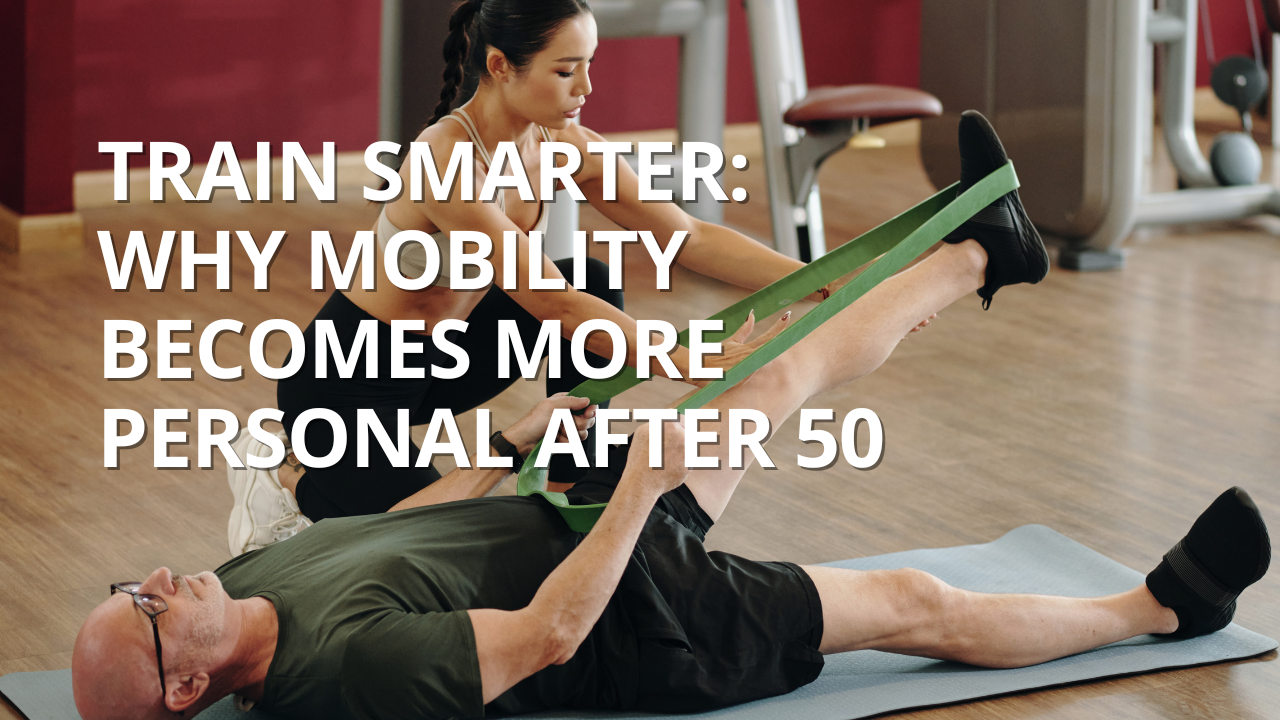
What Mobility Really Means
Mobility is your ability to actively move a joint through a useful range of motion with control. It is different from flexibility. Flexibility is about how far a muscle can stretch. Mobility is about how well you can use that range in real movement.
Good mobility supports:
Better posture
Cleaner movement patterns
More efficient sport technique
Greater comfort during training and daily activity
When mobility is well matched to your body, movement tends to feel smoother and more natural.
Why Mobility Needs Become More Individual
After 50, movement history matters more. Things like previous injuries, years of playing a particular sport, old habits in posture or training all shape how your body moves today. This is why a general stretching routine may help one person but do very little for another.
Common Examples
A golfer may need:
Better thoracic rotation
Improved hip internal rotation
Enough ankle mobility to stay balanced through the swing
Example exercise: 90/90 Hip Internal Rotation Lift-Off
A tennis or badminton player may need:
Better shoulder mobility
More hip and adductor flexibility
Better control when pushing laterally
Example Exercise: Adductor Rock-backs
If you spend long hours in an office or at a desk, you may need:
Improved hip extension
Better upper back movement
More core or glute activation
Example Exercise: Glute Bridge
A Smarter Way to Approach Mobility
A practical mobility routine should be:
Specific to your needs
Short enough to do consistently (5-10 minutes)
Built around the movements you actually use
Key Takeaway
After 50, mobility becomes less about doing more and more about doing what is relevant. The right exercises can help you move more freely, feel better in your sport, and maintain confidence in how your body performs.
Next in the Series
Train Smarter: Why Technique Matters More Than Weight After 50
We’ll look at why good movement quality becomes even more valuable as training progresses, and how better technique supports both results and longevity.
For more information on our personal training programs, please contact us at 012-334-1511 or send us an enquiry here